
A 1912 Carnegie Library, Restored
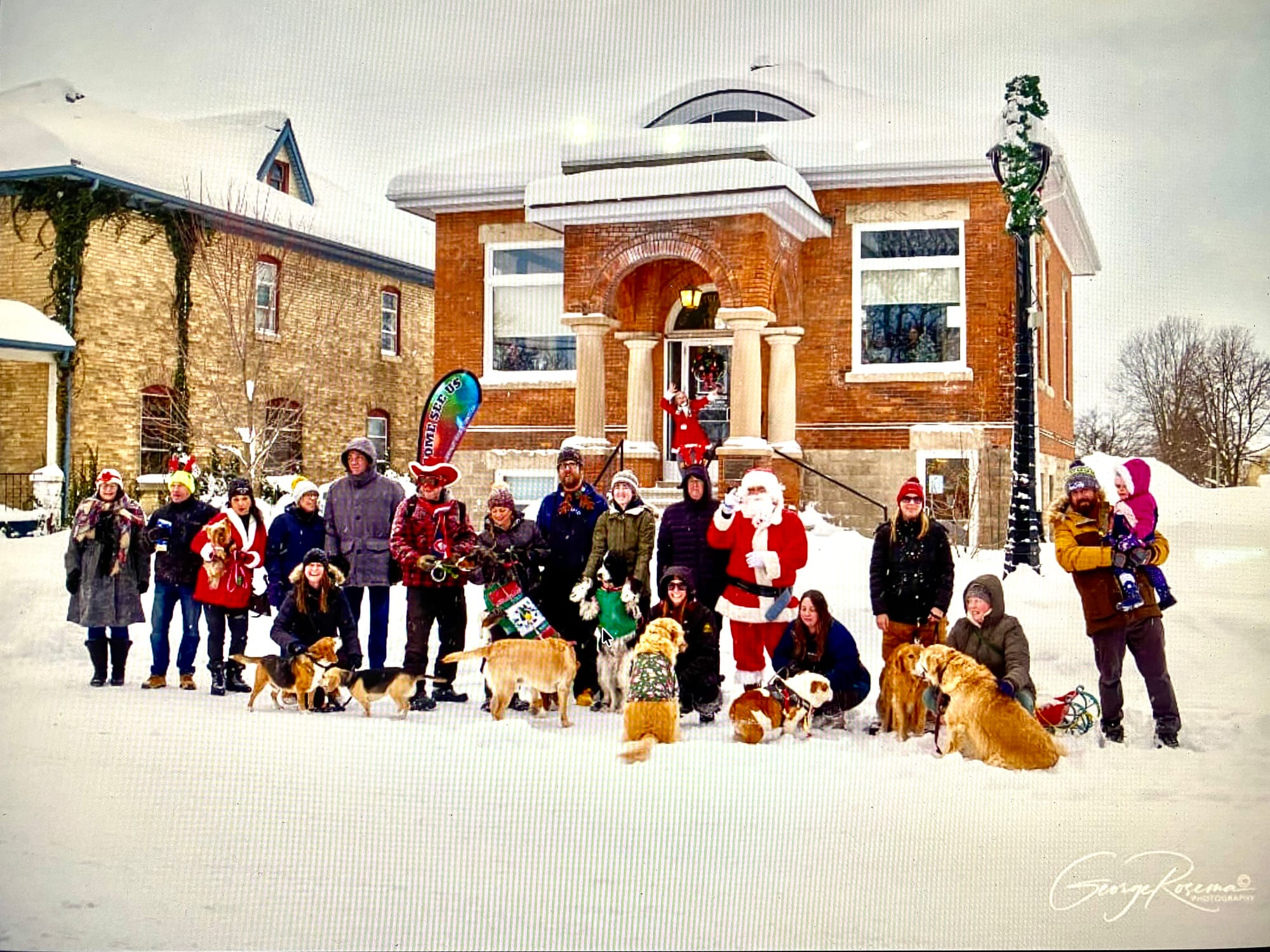
Some buildings are put up to be useful. A few are put up to say something. In 1912 the people of Forest were given one of the second kind — and then, for forty years, nobody used it at all.
Andrew Carnegie's idea
Between 1883 and 1929, Andrew Carnegie funded 2,509 libraries around the world — 111 of them here in Ontario, the largest concentration in Canada. His condition was always the same: the community had to provide the land and commit to running the library. He paid for the building; the town had to want and care for it.
A library outranks any other one thing a community can do to benefit its people. It is a never failing spring in the desert.
— Andrew Carnegie
The idea underneath was simple and, for its time, radical: that anyone — regardless of means or schooling — should be able to walk in off the street and learn something.
Forest gets its library
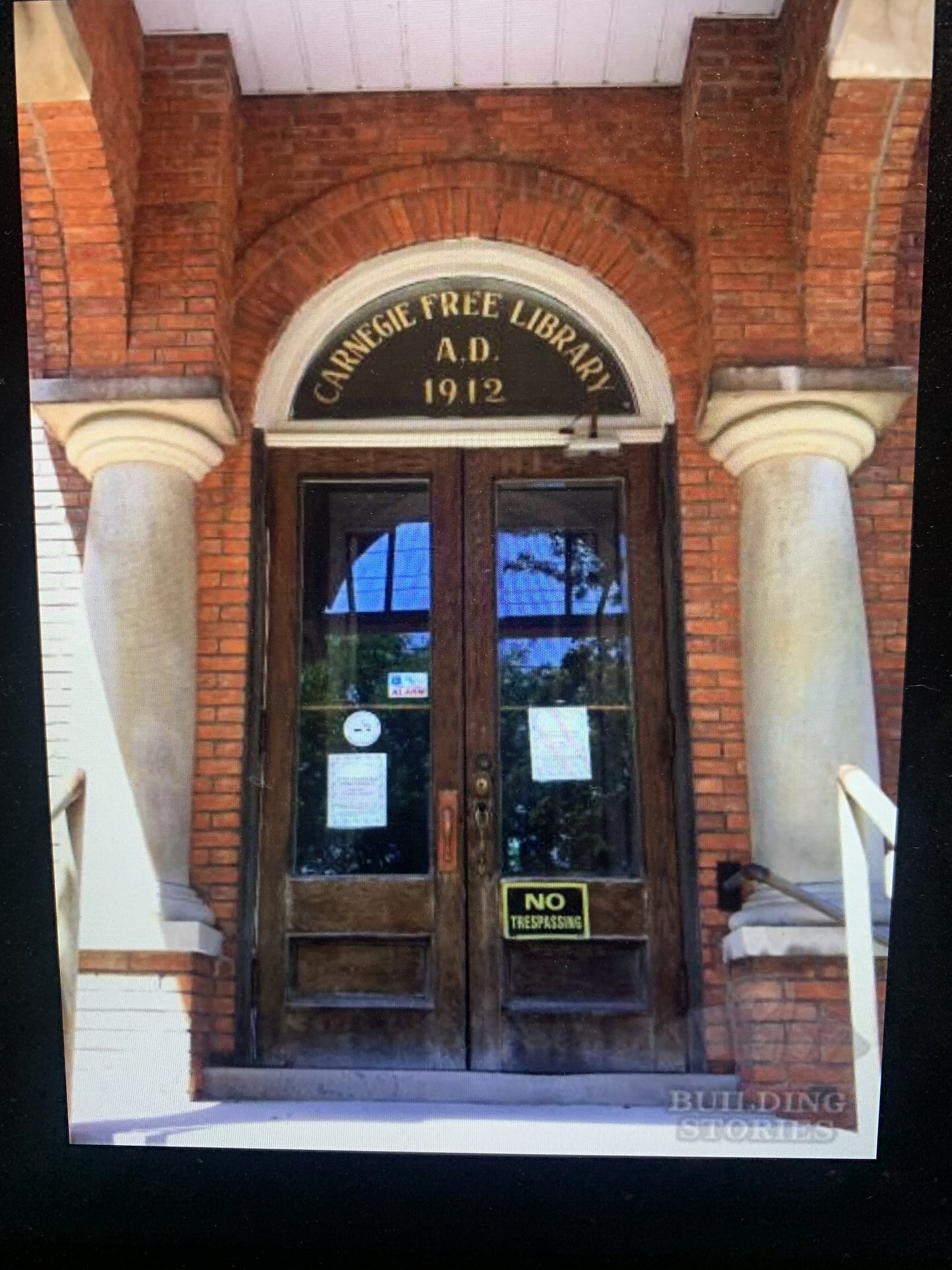
On 16 May 1911, Carnegie awarded Forest a grant of $5,000. The building opened the following year at 12 Main Street North, designed by architect William Austin Mahoney and built by Charles McCordic.
They did not build modestly. Grand columns, a symmetrical facade, proportions borrowed from Roman Palladian architecture — the sort of frontage you would expect on a courthouse or a bank, given to a small town's library. That was deliberate. A Carnegie library was meant to look like it mattered.
Seventy-four years
From 1912 to 1986 it did exactly what it was built to do. Generations of Forest children took out their first library card here. People met on the steps. It was, for the better part of a century, one of the places the town happened.
1986
In 1986 the library itself needed to be bigger, so government funding stopped. The functional library and all its books, moved on, and the doors closed.
What followed was forty years in which one of Ontario's finest small Carnegie buildings, stood on Main Street, doing little, actually nothing at all. Across the Ontario province many of the other 110 buildings, have been demolished, or altered, until nothing of the original heritage remains. This one waited.
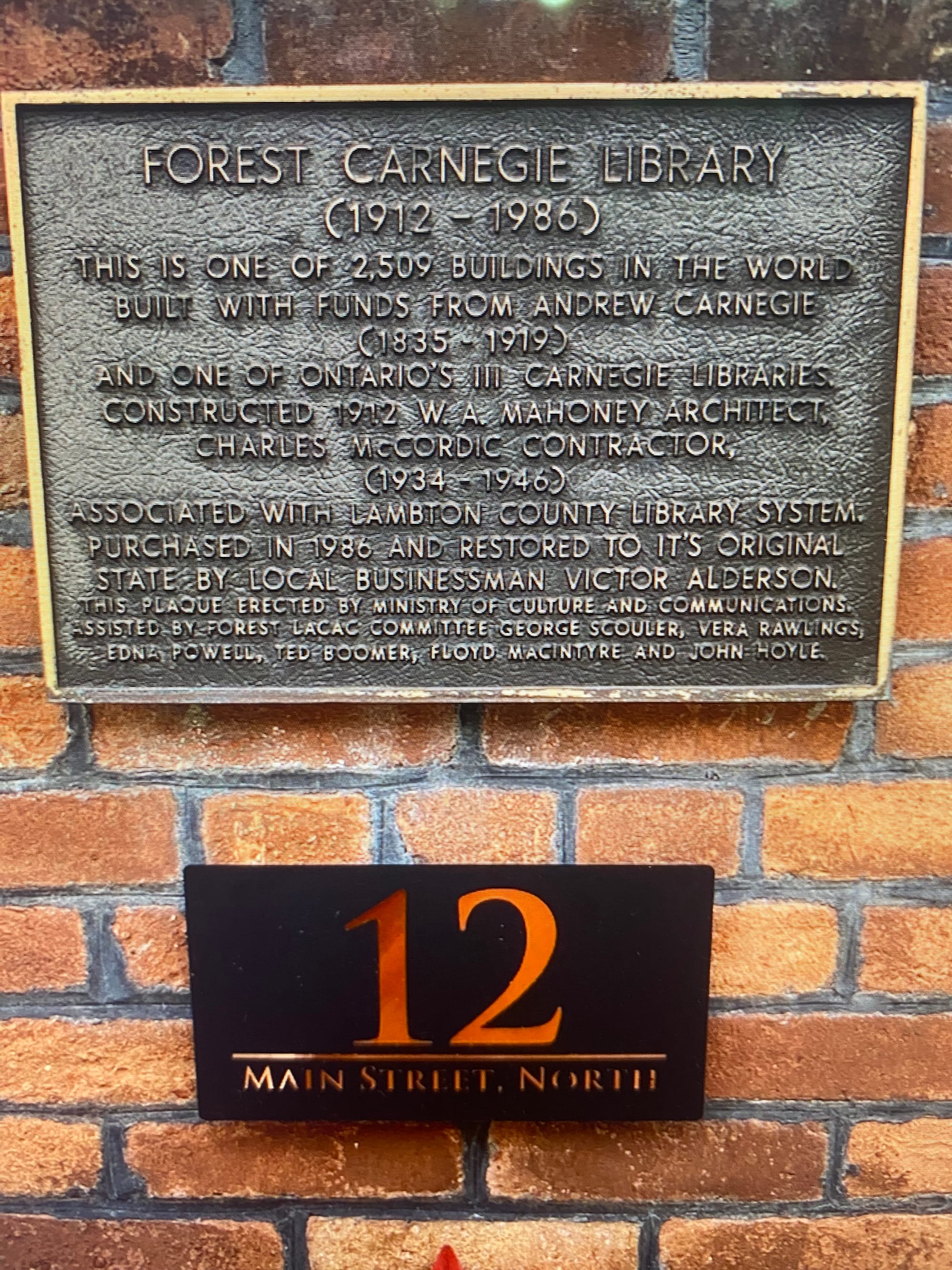
Previous owner, Victor Alderson, had deep love, as we do, for the history of this building and he was successful in having the Ministry of Culture and Communication, assisted by LACAC committee, to mount this plaque and to protect the front architecture.
The restoration
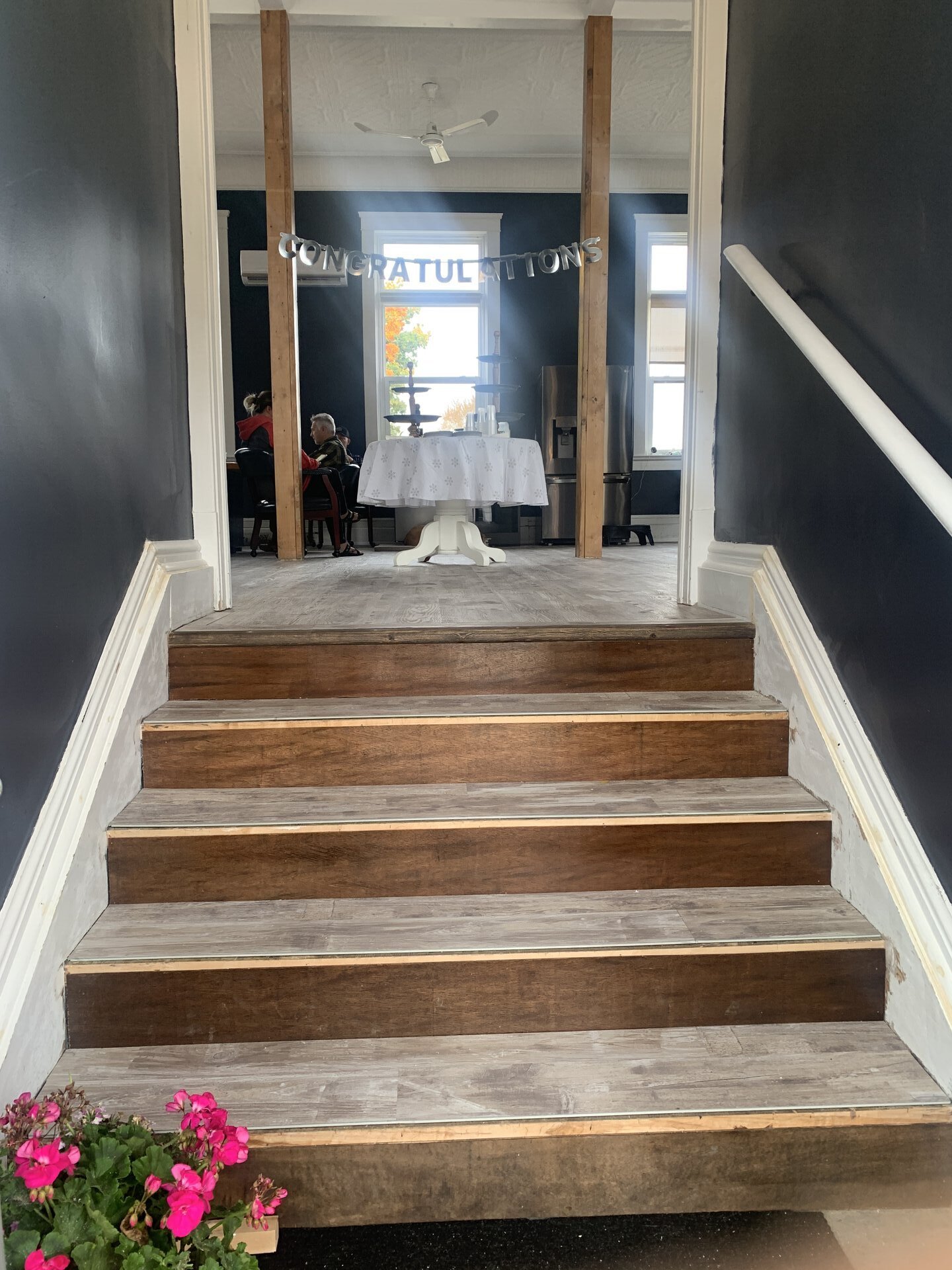
In June 2023 we — Stephen and Kate Ward — took on the building, and continued where the Aldersons had began. The rising water table, has been a known problem of Forest since the wells were no longer in use. So that's were we began - to rebuild the buildings' foundation. Restoring a heritage building of this age is slow process and it is not always glamorous. But the bones were good, and the intent of the place survived four decades of silence remarkably well.
It now breaths, the philosophy "The Thirst of Knowledge" The Forest Carnegie Library Event Centre: is open, and in use again, as well as being looked after.
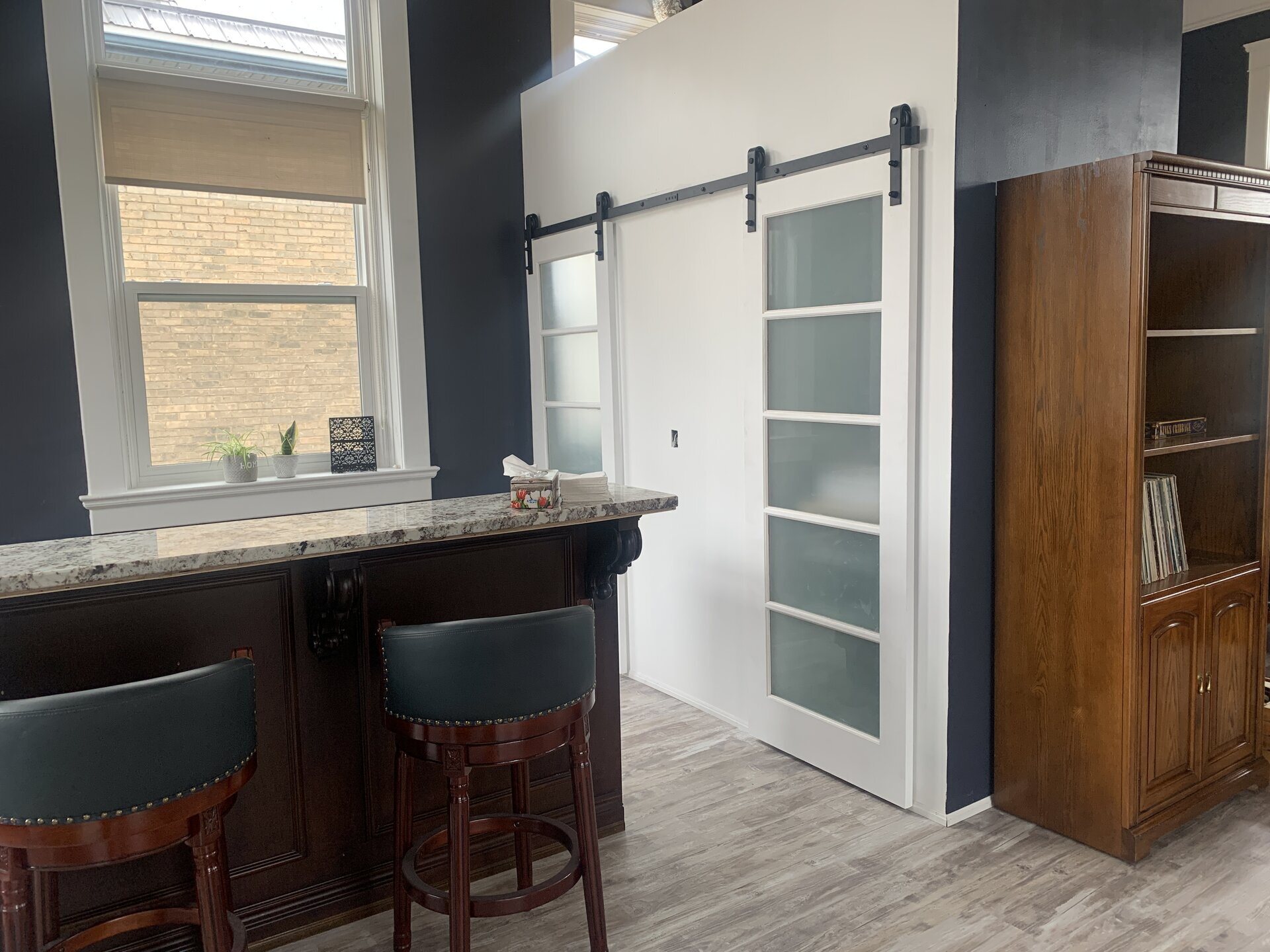
The same idea, a different century
Carnegie had built a room where the community could come together around something worth gathering for. To exchange, to share, to tell stories, to learn about and with others. We have not changed that; we provide a forum in which people gather to fulfill their communication goal.
- Families mark the things that matter — weddings, anniversaries, celebrations of life
- Organisations meet off their site, privately — board retreats, workshops, planning days
- The community uses its building again — receptions, fundraisers, informative gatherings
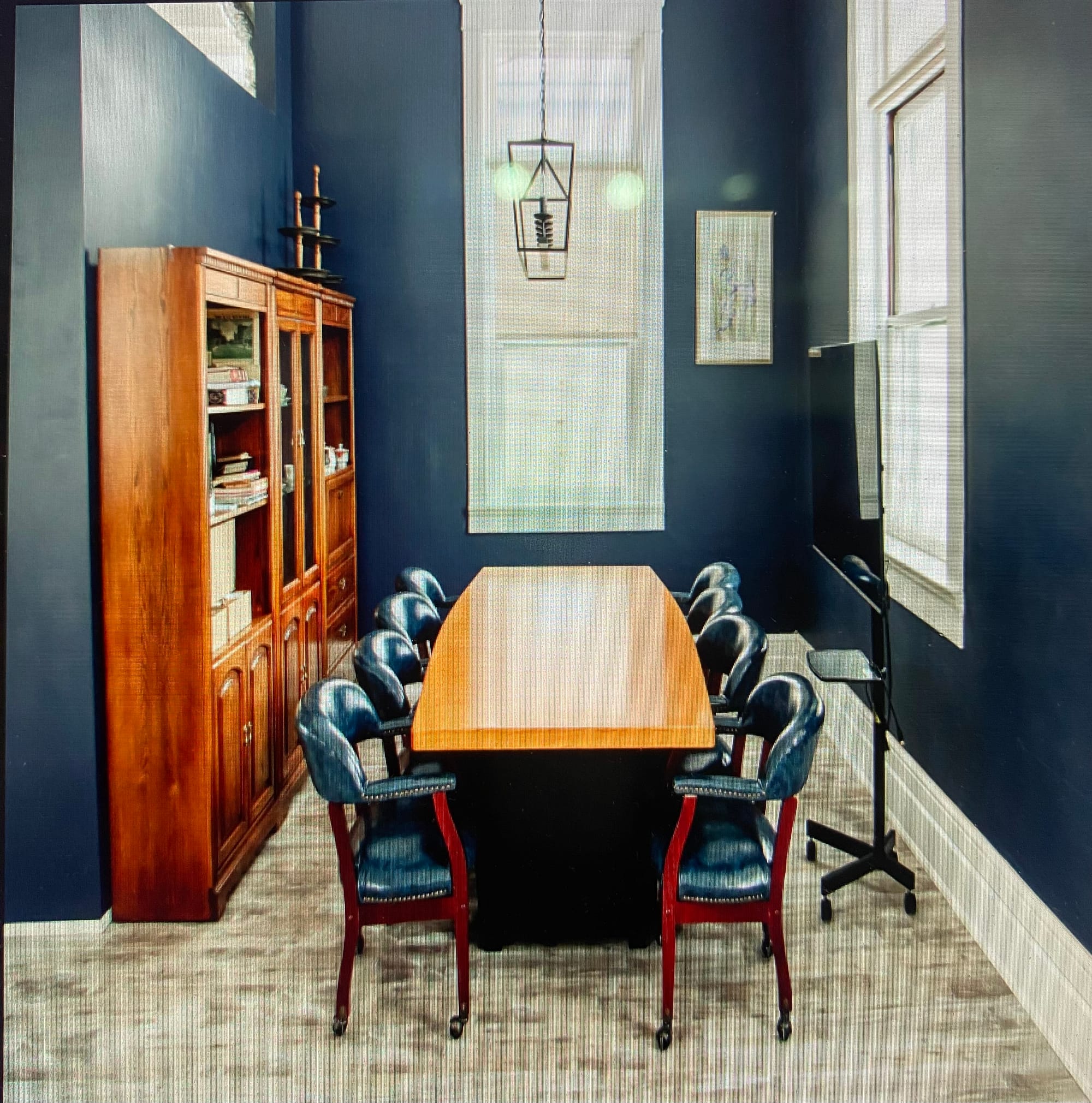
It is a heritage venue in the plainest sense: a historic building still doing what it was built to do—bring people together.
When you hold an event here, you are not simply renting a hall. You are using a building Forest was given in 1912, a place that stood empty for forty years before people believed it was worth saving, restoring and opening again.
We believe this building can once again be a backbone of the community—a place to gather, learn, share, care for one another and nurture our Thirst for Knowledge.
So tell us, Did you use this library before 1986?
We are collecting the building's history from the people who lived it — photographs, memories, library cards, the name of the librarian who told you to keep your voice down. If you borrowed books here, or your parents did, we would very much like to hear from you.
Write to bookings@fclec.com or call 833-851-9927
Visit
You will find us at 12 Main Street North, Forest, Ontario — a heritage venue about twenty minutes inland from Grand Bend, and half an hour from Sarnia. You can see more photographs, check available dates, or arrange a look around by calling 833-851-9927.